Ages Without Apps
Short · October 1, 2026
Dancing Plague of 1518: The Cure Was More Dancing
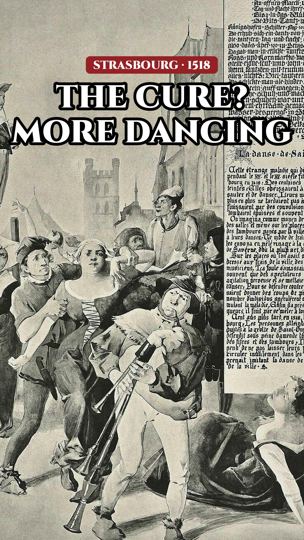
The dancing plague of 1518: when people in Strasbourg started dancing in the street and couldn't stop, doctors blamed "overheated blood" and the city council's cure was more dancing. It cleared guildhalls, built a wooden stage by the horse market and paid musicians.
Key facts about dancing plague of 1518
- It backfired, and the council then banned public dancing and drums and sent the worst cases to a shrine of St Vitus.
A note on the evidence
- The famous "400 dancers" figure comes from a later chronicle; the city records can't confirm it.
Sources for dancing plague of 1518
- John Waller, "In a spin: the mysterious dancing epidemic of 1518," Endeavour 32 (2008)
- John Waller, "A forgotten plague: making sense of dancing mania," The Lancet 373 (2009)
- Ellen Pennant Rea, "The Dancing Plague of 1518," The Public Domain Review (2018)
- Encyclopaedia Britannica, "Dancing plague of 1518"
- Dance Research 35:2 (2017)
Images: the 1642 Hondius engravings after Bruegel show a similar dancing pilgrimage at Molenbeek in 1564; the Spindler illustration of 1518 dates from 1893.
Questions people ask
What are the key facts about dancing plague of 1518?
It backfired, and the council then banned public dancing and drums and sent the worst cases to a shrine of St Vitus.
Is any of this disputed or uncertain?
The famous "400 dancers" figure comes from a later chronicle; the city records can't confirm it.
Where can I check the sources?
This page lists 5 sources, including: John Waller, "In a spin: the mysterious dancing epidemic of 1518," Endeavour 32; John Waller, "A forgotten plague: making sense of dancing mania," The Lancet 373; Ellen Pennant Rea, "The Dancing Plague of 1518," The Public Domain Review.
Where can I watch the video?
The Short is on the Ages Without Apps YouTube channel, and you can watch it on this page.
Enjoyed this story?
Subscribe for the next one.